Lake Tahoe Paradox
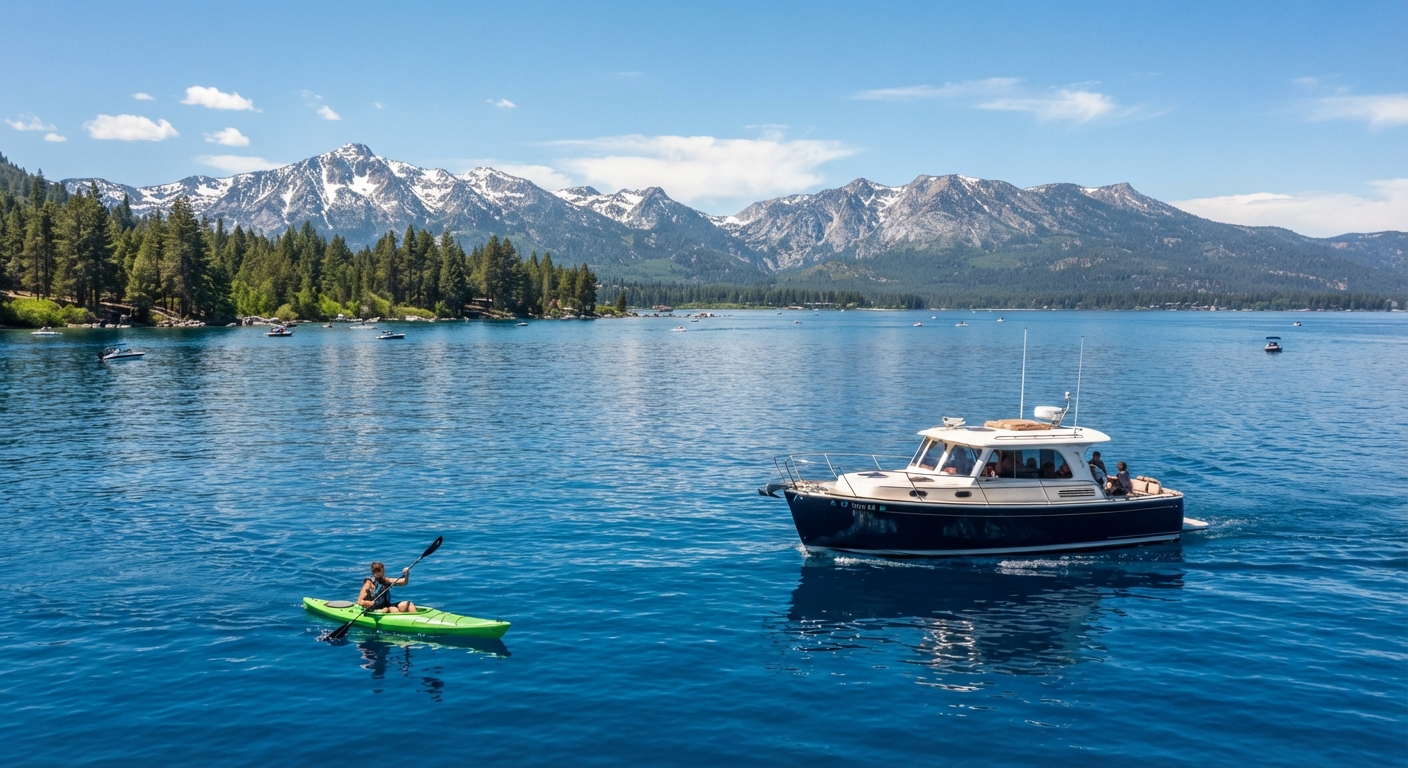
On any blue-sky summer afternoon, the glassy surface of Lake Tahoe plays host to two entirely different worlds. Close to the shorelines of Sand Harbor and Emerald Bay, a vibrant fleet of rental kayaks and paddleboards glides silently over the boulders. Further out, massive motorized cabin cruisers throw twin plumes of white wake against a backdrop of snow-capped Sierra peaks.
Yet beneath this picture-perfect postcard lies a startling safety and socioeconomic divide.
A sweeping national survey conducted by the U.S. Coast Guard reveals that while millions of us take to the water annually, our leisure hours are split by a deadly math. We instinctively view the open lake's heavy, high-speed powerboats as the primary threat to safety. The data tells a completely opposite story, exposing a massive mismatch between a vessel's perceived safety and its true operational risk.
This regional hazard is magnified by an educational and regulatory vacuum. Because local registration laws historically target motorized engines, millions of smaller, human-powered watercraft effortlessly slip through the regulatory net. The very demographic experiencing the sharpest spike in risk is entirely divorced from the financial ecosystem—and the safety education—meant to keep them alive on the water. They hit the water with zero formal safety training, frequently ignoring basic life jacket requirements until sudden, afternoon thermal winds sweep over the mountains and turn a placid lake into a survival situation.
Who is navigating this risk, and who is truly at the helm? The federal data thoroughly deconstructs our cultural stereotypes of the wealthy yacht club elite, painting a much more blue-collar picture of the American boater, while carving out distinct trends based on living situations, safety awareness, and family structures.
Tahoe Fatality Risk Metrics
Tap a demographic layer to pivot chart data: